русский
 日本語
日本語 한국어
한국어 Latine
 Tiếng Việt
 বাংলা
বাংলা ไทย
ไทย عربى
عربى Hrvatski
 dansk
dansk čeština
 Nederlands
 Pilipino
 Suomalainen
 Magyar
 Indonesia
 italiano
 Gaeilge
 Bahasa Melayu
 norsk
norsk فارسی
فارسی Português
 Polskie
 Română
 Slovák
 svenska
 Türk
TürkThree quotations land on the same desk for a 600-square-meter hotel facade: kiln-dried western red cedar, Siberian larch, and a wood-plastic composite pan...
READ MORE
2026-09-25
Three quotations land on the same desk for a 600-square-meter hotel facade: kiln-dried western red cedar, Siberian larch, and a wood-plastic composite panel system. The cedar bid is the highest and quietly assumes re-staining within four years, while the composite bid sits in the middle and asks for little more than an occasional wash. Both routes fall under the term exterior wood cladding, and the right choice comes down to budget, facade exposure, and how much maintenance the owner will actually commit to once the scaffolding comes down. The short version for most commercial projects: composite cladding usually wins on lifecycle cost, while solid timber still wins on pure natural texture. The sections below set out where each material earns its place, which profiles and fixing details shape the final look, and where the real costs hide after installation day.
Exterior wood cladding is a rain-screen skin fixed to the outside of the structural wall. It sheds most rainwater, shields the membrane behind it from ultraviolet light and temperature swings, and carries almost the entire visual identity of the building. Because the boards stand off the wall on a ventilated cavity, moisture that finds its way behind the cladding can drain and dry out instead of sitting against the structure.
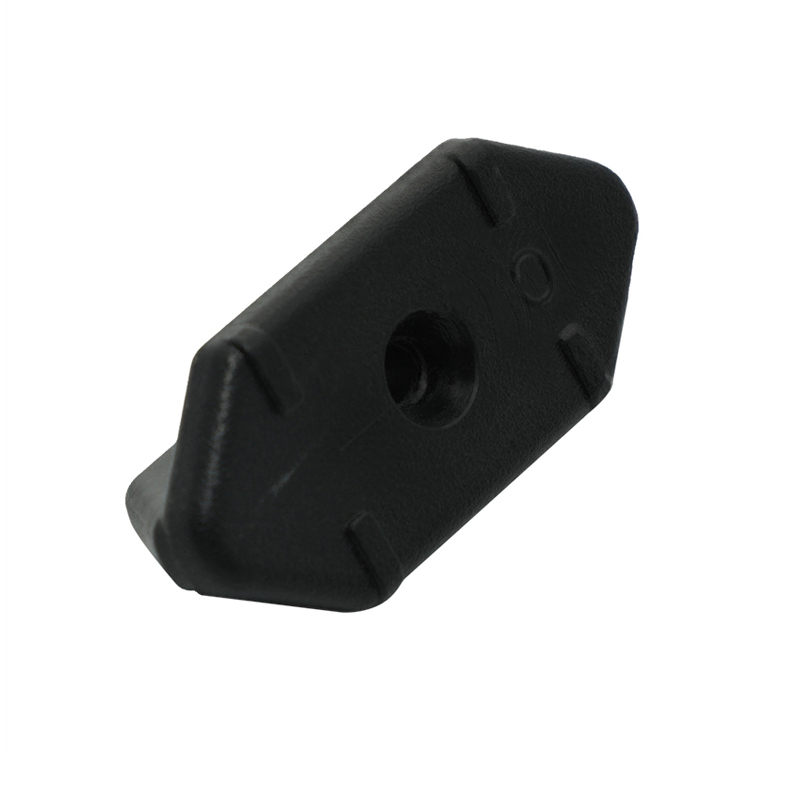
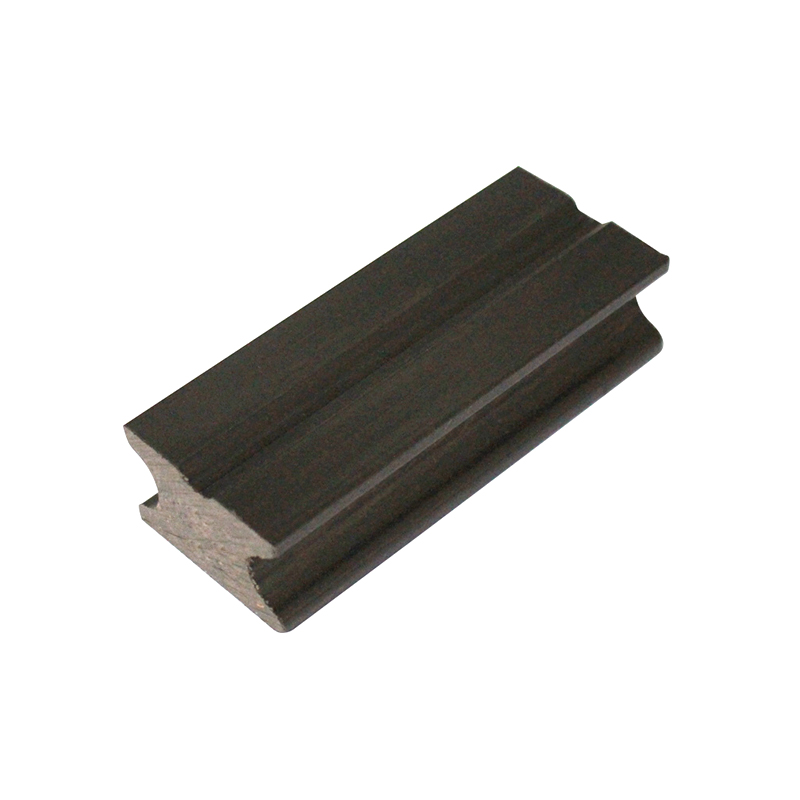
Orientation and profile decide the final impression. Horizontal shiplap and half-lap boards give a layered, classic facade; vertical V-groove or shadow-gap boards make low buildings look taller and shed rain faster; open square-edged rainscreen boards suit contemporary designs but demand a robust waterproof membrane behind them. Whatever profile is chosen, every run of boards eventually ends, and every end and corner needs a trim or cap that matches the field boards. Buying cladding as a matched system rather than loose boards is what keeps those junctions crisp on site.
Four species dominate the solid-wood side of the market, and each brings a different maintenance temperament:
The real difference between these species is not how they look on installation day, it is how many hours the facade will demand every year afterwards.
Typical Annual Maintenance Hours per 100 Square Meters of Facade
The chart above estimates the maintenance hours a facility team should budget each year for every 100 square meters of facade in a temperate climate with moderate pollution. Cedar sits at the top because its soft surface and natural tannins call for regular washing plus a re-coating cycle to slow silvering and keep water out. Larch and thermo-treated pine ask for somewhat less, mostly cleaning and occasional oiling, although brittle thermo-pine chips more easily while that work is being done. Classic WPC cladding drops the figure sharply because its color runs through the whole board, so marks can be washed or lightly sanded with no re-coating at all. Co-extrusion boards sit lowest of all, since the fused polymer shell shrugs off ultraviolet fading and most stains and needs little beyond a rinse. Treat these as planning figures rather than promises, because coastal salt, heavy tree shade, and south-facing sun can all push the numbers upward.
Wood-plastic composite cladding extrudes a blend of wood fiber and polyolefin plastics into boards that keep a timber look without timber's appetite for water. Manufacturers such as Senyu Wood, with twelve years in wood-plastic composites, press wood flour and rice husk fiber into engineered cross-sections with fixing grooves, matching trims, and project-specific colors, which sawn boards cannot easily imitate. For buyers comparing routes, it helps to first understand what composite siding cladding is and how it is made before weighing quotes.
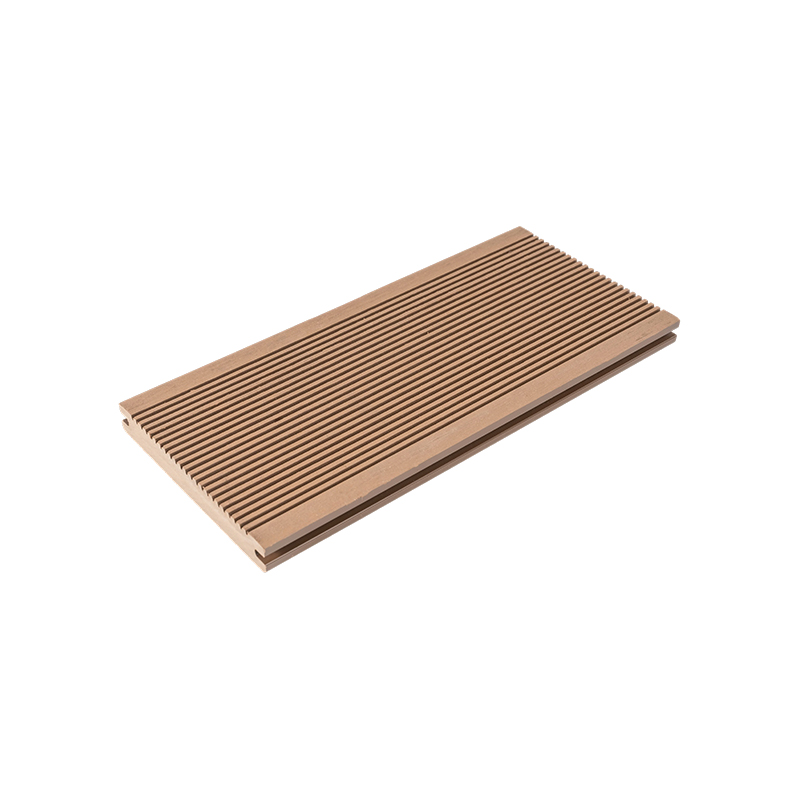
Classic WPC wall panels use a brushed or smooth surface with color mixed into the core, which keeps the price low and hides minor scratches well. They suit rental housing, courtyard walls, and budget commercial facades where a clean, uniform finish matters more than deep grain relief.
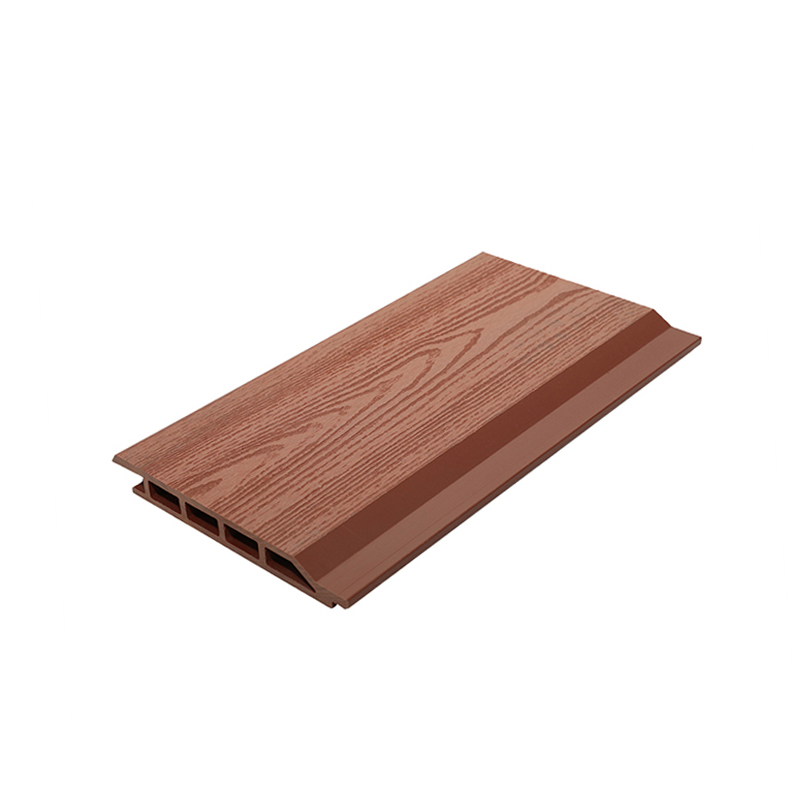 Classic Cladding Outdoor Siding Wall Panel A budget-friendly WPC exterior wall panel with a brushed or smooth finish and color mixed into the core. It suits rental housing, courtyard walls, and commercial facades where a clean, uniform look matters more than deep grain relief. View Product →
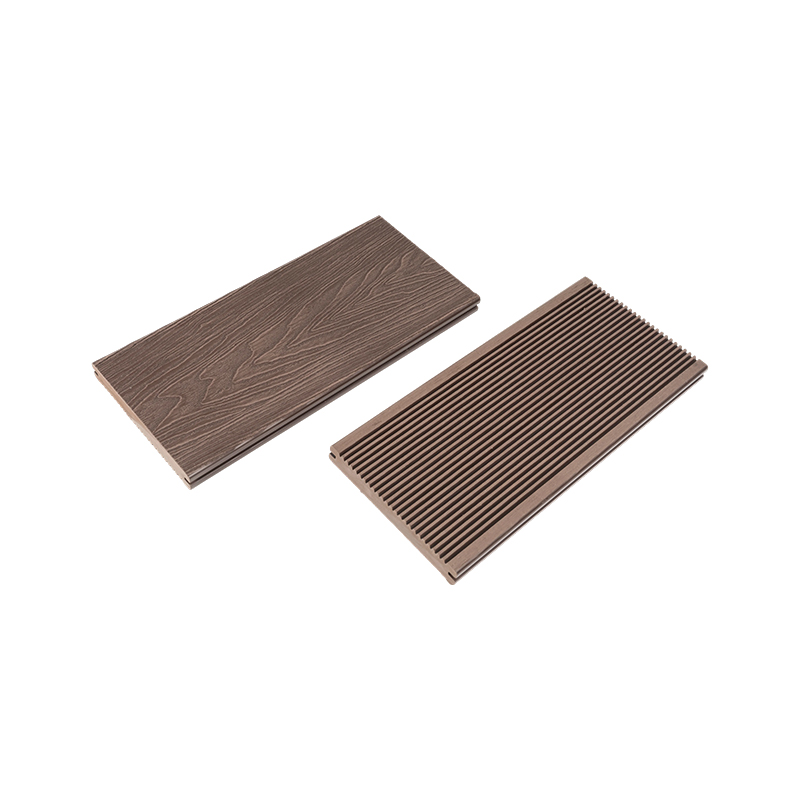
 Where a project wants the shadow and relief of sawn timber, 3D embossed panels carry a pressed wood grain that catches low-angle light the way planed cedar does, without the coating schedule cedar needs to keep it looking fresh.
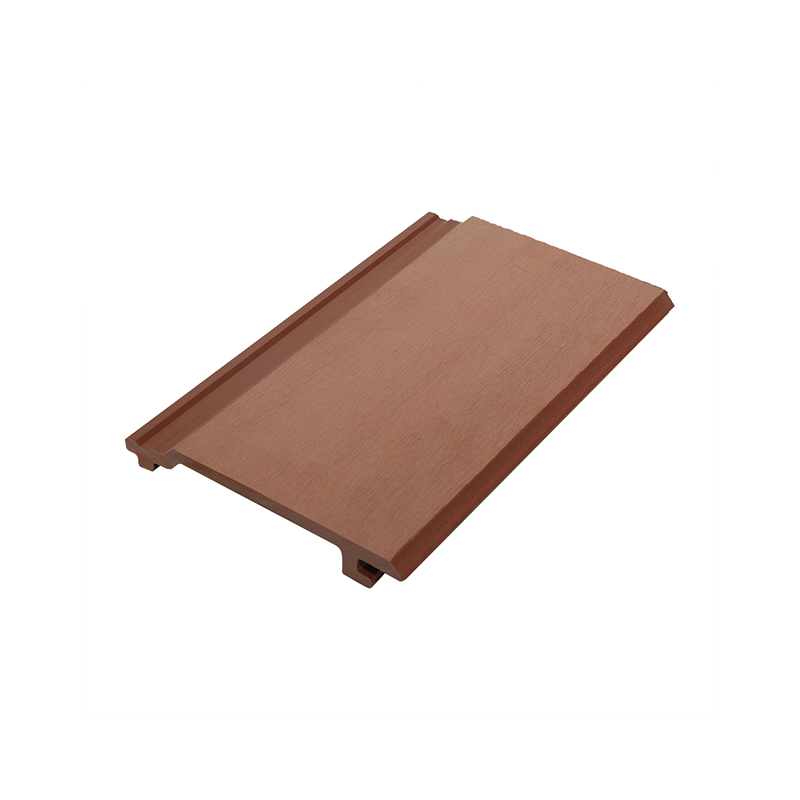 3D Embossed Cladding Outdoor Siding Wall Panel This WPC cladding carries a pressed 3D wood grain that casts shadow and relief like sawn timber. It offers the look of planed cedar without the regular coating schedule, making it a practical choice for textured facades. View Product →
 For the toughest exposures, co-extrusion fuses a polymer outer shell to the core during extrusion. The shell locks the color in and keeps stains, algae, and ultraviolet light out, which is why it is the usual specification for pool surrounds, coastal elevations, and street-facing commercial walls. A panel in the 219 x 26 mm format also covers a wall quickly, cutting joint count and clip count per square meter.
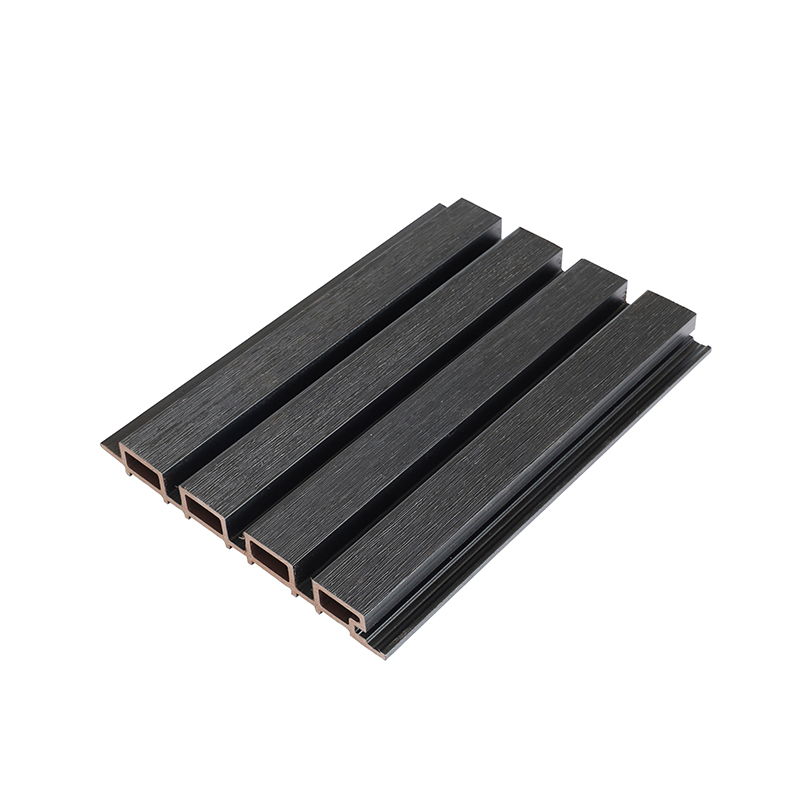 Co-extrusion Composite Siding Cladding 219x26mm Wall Panel A wide-format co-extruded WPC panel with a protective polymer shell that locks in color and resists stains, algae, and UV. Its 219 x 26 mm format covers walls quickly, ideal for pools, coastal elevations, and commercial walls. View Product →
 Sticker price per board is the figure sales sheets lead with, but it is the least useful number for planning a facade budget. The two charts below show indicative panel costs first, then how cumulative spend develops once upkeep is added.
Typical Supplied Panel Cost per Square Meter, USD, Indicative
The bars compare typical supplied panel prices per square meter, excluding sub-structure, trims, and labor, based on commonly traded grades in international trade. Classic WPC enters lowest because its core carries the color and no coating line is involved. Thermo-treated pine and co-extrusion WPC share a similar middle band, while Siberian larch and western red cedar climb higher on slower growth, grading rules, and import distance. Prices move with volume, region, and freight, so the chart describes a shape rather than a quotation. Serious buyers should therefore collect delivered-cost figures for the complete wall build-up, including battens, clips, screws, and trims, before ranking any supplier.
Cumulative Spend per 100 Square Meters over 20 Years, USD, Illustrative
The line chart adds maintenance back in and tracks cumulative spend per 100 square meters across twenty years for cedar against co-extrusion WPC. Cedar starts roughly 40 percent higher and then climbs in visible steps as staining cycles fall due every four to five years. The composite line stays almost flat, rising only with washing and routine inspection. The two curves cross in cumulative terms at around year seven, and by year twenty the gap has grown to roughly 17,000 dollars per 100 square meters. If the cedar facade needs partial board replacement in its second decade, the real gap widens further. That arithmetic is the evidence behind the opening claim that composite cladding usually wins on lifecycle cost.
| Material | Typical service life | Upkeep cycle | Known weak point | Best fit |
|---|---|---|---|---|
| Western red cedar | 25 to 40 years | Re-stain every 2 to 4 years | Silvering and fade when uncoated | Premium residential facades |
| Siberian larch | 20 to 35 years | Oil every 3 to 5 years | Knots and surface checking | Cost-conscious solid-wood look |
| Thermo-treated pine | 15 to 25 years | Oil every 2 to 3 years | Brittle surface, early fading | Sheltered, low-traffic walls |
| Classic WPC cladding | 20 to 25 years | Wash once or twice a year | Slight fading in strong sun | Rental housing, budget commercial walls |
| Co-extrusion WPC cladding | 25 years and above | Occasional rinse | Higher panel price at the start | High-exposure and coastal facades |
When a project team sits down to rank the shortlist, six dimensions decide most facade arguments, and the radar chart below scores kiln-dried solid timber against co-extrusion WPC on each one.
Cladding Material Scorecard, Scored 1 to 10
On the radar chart, a score of ten sits at the outer edge, so the polygon stretching further along an axis is stronger there. Co-extrusion WPC takes the four practical axes of weather resistance, color retention, dimensional stability, and upkeep simplicity, because its polymer shell and engineered core ignore many problems that trouble bare timber. Solid timber answers with its strongest single score on natural surface feel, which is exactly why architects still specify cedar and oak when the facade is part of the brand. Installation speed leans toward composites, since consistent extruded boards and clip systems move faster than variable sawn boards. The dimensional stability gap matters most on tall elevations, where twisting boards show up as uneven shadow lines. Grades, coatings, and climates shift these scores, so use the chart as a structure for comparing the quotations already on your desk.
Before any cladding contract is signed, walk the following points with the supplier and get the answers in writing:
Manufacturers that run their own extrusion lines can usually adjust color, cross-section, and surface texture to a specific project, so raise custom requirements early, before drawings are frozen. Browsing a full composite siding and cladding range also shows how panel formats, surface technologies, and matching trims fit together, which makes supplier quotations far easier to compare.
The decision rule is short. Choose solid timber when natural texture justifies a coating budget and an owner who will honor it. Choose classic WPC when budget leads and the elevation is moderate. Choose co-extrusion WPC when exposure is harsh or maintenance access is expensive. Whichever route a project takes, judge the offers on twenty-year cost, matched fixing accessories, and realistic upkeep hours rather than the first page of the quotation. Panel makers such as Senyu Wood, backed by an annual capacity of around 20,000 tons of WPC products, quote from project drawings with customized colors, engineered cross-sections, and a full accessory kit, which lets buyers compare complete wall build-ups instead of loose boards.
Three quotations land on the same desk for a 600-square-meter hotel facade: kiln-dried western red cedar, Siberian larch, and a wood-plastic composite pan...
READ MOREAsk anyone who has re-laid a failed deck and the same stories return: rows of screws that rusted and streaked pale boards, butt joints that closed up on a...
READ MOREMost cladding problems trace back to decisions made before a single panel reaches the wall: a substructure without a ventilation gap, a surface that fades...
READ MOREIarr ar suiteálaí cad a scriosann deic ilchodach i ndáiríre, agus is annamh a bhíonn an freagra ar an mbord. Is stríoc meirge é ag fuiliú trasna dromchla ...
READ MOREDe ghnáth maireann cumhdach balla WPC idir 20 agus 30 bliain nuair a shuiteáiltear agus a chothabháiltear i gceart, sáraíonn sé go mór ...
READ MORE