русский
 日本語
日本語 한국어
한국어 Latine
 Tiếng Việt
 বাংলা
বাংলা ไทย
ไทย عربى
عربى Hrvatski
 dansk
dansk čeština
 Nederlands
 Pilipino
 Suomalainen
 Magyar
 Indonesia
 italiano
 Gaeilge
 Bahasa Melayu
 norsk
norsk فارسی
فارسی Português
 Polskie
 Română
 Slovák
 svenska
 Türk
TürkThree quotations land on the same desk for a 600-square-meter hotel facade: kiln-dried western red cedar, Siberian larch, and a wood-plastic composite pan...
READ MORE
2026-09-18
Ask anyone who has re-laid a failed deck and the same stories return: rows of screws that rusted and streaked pale boards, butt joints that closed up on a hot afternoon and lifted, side gaps that wandered from three millimeters to ten along one run. The boards are rarely the cause. Composite decking fasteners, and the spacing they enforce, are.
The short answer: build the open field on hidden side clips matched to your board profile, anchor the first and last boards with a starter clip, and reserve color-matched stainless screws for stairs, perimeter boards and repairs. Set side gaps at 4 to 6 mm, size the end gaps to the installation temperature, and order clips by the square meter rather than by guesswork. Get this right and the surface stays clean and stable for years; skip a step and even premium boards will misbehave.
Composite boards move differently from timber. A wood-plastic board carries almost no free moisture, so it barely shrinks, but the polymer inside it expands and contracts with temperature. A four meter board can change length by several millimeters between a cold morning and a peak summer afternoon. Composite decking fasteners therefore do three jobs at once: hold each board down against uplift, hold a side gap that stays even, and leave end gaps wide enough for the boards to travel. That is also why nearly all composite decking leaves the factory with a groove machined into each side; that groove is the mounting point the whole hidden clip system is built around.
Decide the fixing strategy before you price anything. Face screws are the cheapest per piece and grip hardest, but they pierce the surface, leave visible rows and can lock a moving board in place unless each one sits in a slightly oversized hole. Hidden clips cost more up front and need grooved boards on a square frame, yet they deliver an unbroken surface, factory-set gaps and no plugs to maintain. The strongest combination uses clips across the open field and screws only where stairs, edges or local rules demand them.
| Fastener | Typical use | Gap it controls | Relative cost | Risk if chosen badly |
|---|---|---|---|---|
| Starter clip | First and last boards against walls or rim joists | Side gap on one edge | Low | Boards drift sideways without a fixed reference edge |
| Plastic side clip | Hollow residential boards in standard yards | Side gap between boards | Low | Creep or cracking under heavy load and harsh sun |
| Stainless steel side clip | Solid boards, pools, rooftops, commercial decks | Side gap between boards | Medium | Paying for strength a light deck never needs |
| Butt joint clip | End-to-end joints between joists | End gap at the joint | Medium | Boards collide on hot days and lift at the seam |
| Color-matched screw | Stairs, borders, perimeter and repairs | None, spacing set by hand | Low per piece | Rust streaks and trapped movement if over-tightened |
Side clips carry the deck. Plastic clips, usually nylon or polypropylene with UV stabilizers, dominate residential projects because they cannot rust, they drive in quickly, and they cost a fraction of metal. Stainless steel clips justify their premium on solid boards, pool surrounds, rooftop terraces and anywhere heavy furniture or foot traffic will load the surface; they flex less under load and they outlast the boards around them.
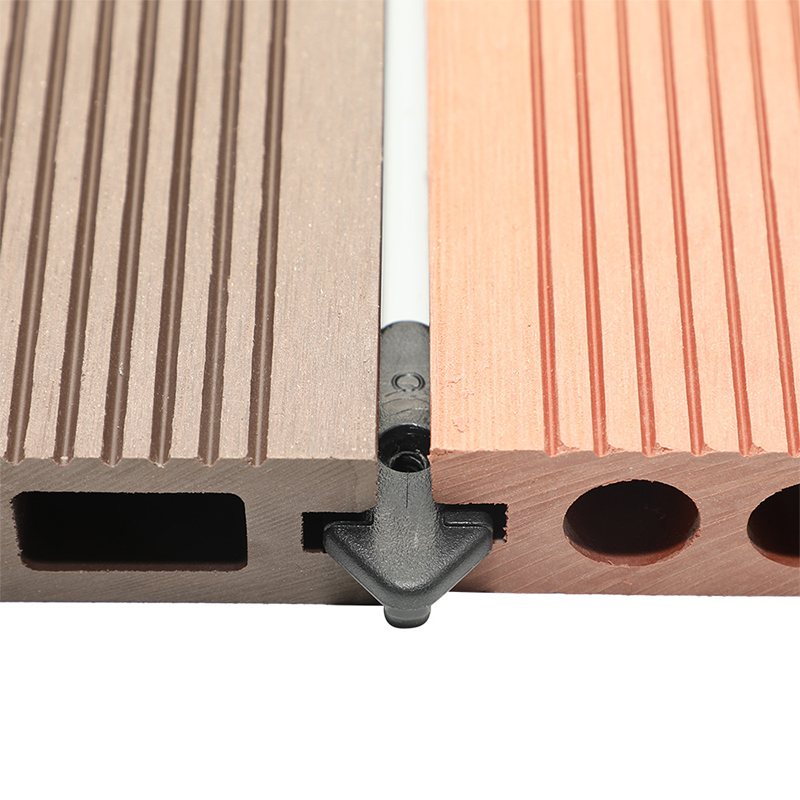 Plastic Clip for WPC Composite Decking Polypropylene clips with UV and corrosion resistance that keep 5-6 mm side gaps between boards. A rust-free, low-cost choice for residential WPC decks installed quickly at scale. View Product →
 Check three details before ordering either type. The clip tab must match the groove depth of your exact board profile, which is why buying clips and boards from one supplier removes a whole class of fit risk. The screw channel should take a 4 mm stainless screw without wobble. Clip thickness, commonly around 2 mm on steel clips, sets the side gap, so never mix thicknesses across a single deck.
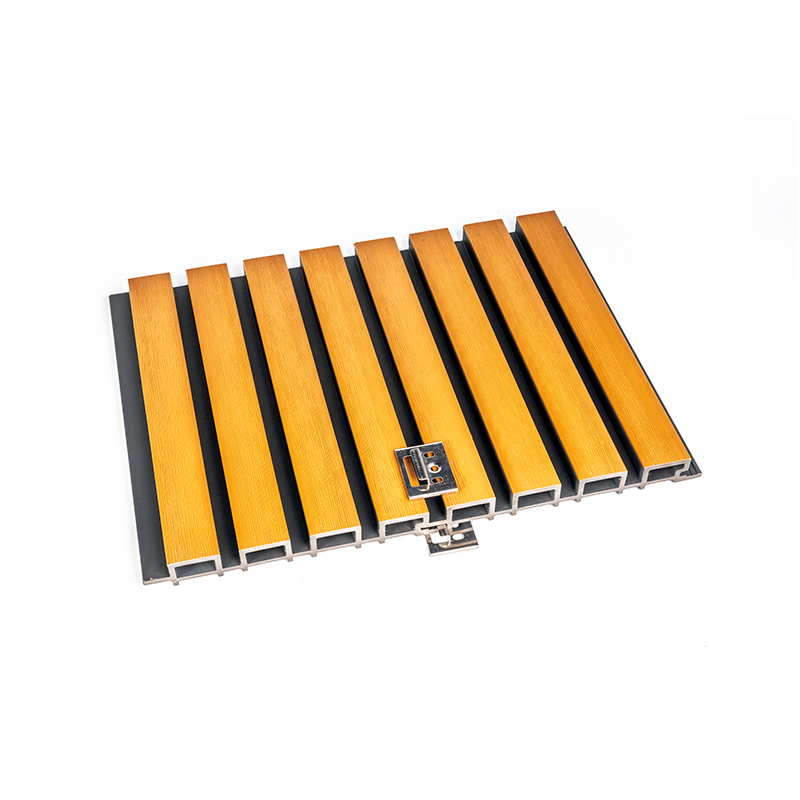 Stainless Steel Clip for Composite Decking Concealed stainless fastener, available in 210, 410 or 304 steel, that secures composite boards invisibly while resisting rust in wet or coastal locations. Suited to high-load areas like pool surrounds and terraces. View Product →
 A starter clip grips the first board against the house wall or rim joist without piercing the visible edge, and a matching clip anchors the final board on the far side. Between joists, where two boards meet end to end, a butt joint clip holds both ends and keeps the joint gap consistent. The clip maintains alignment; the spacing itself is still set by hand, so measure each end gap before driving the fixing.
Screws still finish several critical zones. Stair treads, breaker boards, picture-frame borders and any overhanging board end are fixed with color-matched stainless screws, preferably 304 grade near pools or the coast, each driven into a slightly oversized hole so the board can slide beneath the head. Keep spare screws and clips from the original batch, because accessory colors and lot specs drift between production years.
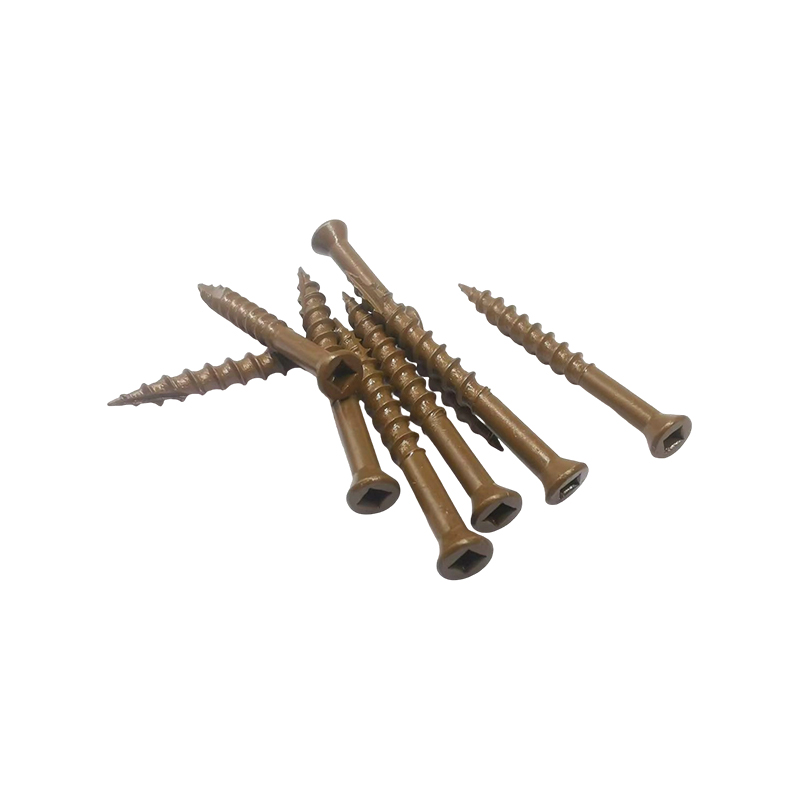 Stainless Steel Decking Screw Self-tapping 304/316 stainless screws for fixing stair treads, breaker boards, borders and board ends where clips cannot reach. Their corrosion resistance keeps critical fixing zones secure outdoors. View Product →
 Joist spacing drives clip count, and clip count drives both budget and stiffness. Hollow residential profiles normally sit on joists at 300 to 350 mm centers, solid boards tolerate 400 to 450 mm, and diagonal layouts or commercial decks tighten those figures by roughly a third. Tighter spacing means more joists, more clips and more screws, but it also means less flex under load, which is exactly what a deck carrying planters, benches and gatherings needs.
Side gaps are largely fixed by the clip; end gaps are a judgment call, and installation temperature is the input. Boards laid on a cool morning will expand through the day and through the summer, so they need room to grow. Boards snapped in during a heatwave are already close to maximum length and need less. End gaps should also scale with board length, because a longer board travels further in absolute millimeters.
No fixing method wins every category, so weigh the dimensions that matter for your build before you commit. The chart below compares the two field systems across six practical axes.
The costliest procurement errors are quiet ones: generic clips that never seat in the groove, mixed clip thicknesses that let the gaps wander, and carbon steel screws substituted on a pool deck, which surfaces two summers later as rust streaks across pale boards. Treat fasteners as a system specified together with the boards, not as a last-minute shelf purchase.
Composite decking fasteners are small, inexpensive and decisive. Specify the clip set alongside the boards, respect the gap table, and the deck will hold its lines for years with very little attention. If you are planning a build and want profile, clips, joists and spacing resolved as one package, Senyu Wood supplies decking boards, joists, clips, screws and edge trims as a matched system; you can start with our guide to what WPC decking is , or browse the complete composite decking range to compare profiles. Send your drawings and square meterage, and a material list with the gaps already calculated comes back within days.
Three quotations land on the same desk for a 600-square-meter hotel facade: kiln-dried western red cedar, Siberian larch, and a wood-plastic composite pan...
READ MOREAsk anyone who has re-laid a failed deck and the same stories return: rows of screws that rusted and streaked pale boards, butt joints that closed up on a...
READ MOREMost cladding problems trace back to decisions made before a single panel reaches the wall: a substructure without a ventilation gap, a surface that fades...
READ MOREIarr ar suiteálaí cad a scriosann deic ilchodach i ndáiríre, agus is annamh a bhíonn an freagra ar an mbord. Is stríoc meirge é ag fuiliú trasna dromchla ...
READ MOREDe ghnáth maireann cumhdach balla WPC idir 20 agus 30 bliain nuair a shuiteáiltear agus a chothabháiltear i gceart, sáraíonn sé go mór ...
READ MORE